This summer presents a lot of opportunity for Sellers in the Mid-Willamette Valley. Inventory is LOW and there are buyers anxious to buy. It is a great time to sell.
Monmouth/Independence, Oregon is a community that is very desirable. People are moving to upsize, downsize, relocate for a job or to be close to family. There are very few mid-range residential homes available. Buyers targeting this community are getting very discouraged. They are anxious to see more homes come on the market.
No competition and anxious buyers is the perfect recipe for selling. But a word of caution- DO NOT OVER PRICE. Buyers are very savvy. They are following pricing and they know when a home is over priced. Even with low inventory, an over priced listing typically sits on the market and ultimately has to take a price cut. Price your home within the spectrum of comps and expect to get your asking price with limited contingencies and a quick close. There is a lot of value in a stress free sale.
There continues to be a buzz about a declining market. In the Mid-Willamette Valley, the conditions aren’t right for a crashing market. Yes the interest rates are up, but the demand is high. Employment is stable. There are many buyers that are selling a home and have a large down payment or they are paying cash for their purchase. The buyers are out there looking and they are ready to buy.
If you are considering selling, now is an excellent time!
June is National Home Ownership Month. It is a time to celebrate the accomplishment and honor the dream of home ownership. Home ownership is an opportunity to accomplish a major achievement, create financial stability and establish roots in a community.
There is a great sense of pride and accomplishment when achieving the goal of home ownership. It means you have been committed to maintaining a steady income, managed spending and used credit wisely. There is a lot of hard work and diligence that goes into buying a home. The reward is so gratifying. There is a lot of freedom in being able to paint the colors you want and make modifications that fit the way you live.
Home ownership creates financial stability. A home is a major asset. The longer you own it, the more you gain equity. That equity can be used in many different way. Maybe you purchase a modest starter home. After a few years, as you pay down the loan and the value increases, you can sell that home and use the gain to purchase a larger, more long term home. You could take the equity out of your home and use it to buy a second home or an investment property. You could use the equity to make improvements to your home and increase its value. Upon retirement, you could sell your home and use the proceeds for living expenses. There are many options for leveraging the value of your home.
When you own your home, you are making a commitment to where you live. You are putting down roots and creating stability for the people you live with. You are becoming a part of a neighborhood and a community. People who own their own home often have pride in ownership and a sense of respect for their neighbors. They value a safe and healthy neighborhood and tend to engage in their community.
Home ownership is an exciting accomplishment. If home ownership is your goal, keep working and keep saving. The hard work will pay off in many ways.
It is spring! And it is the perfect time of year to sell your home. Flowers are in bloom. The grass is green. It is the best time of year for your home to sparkle and shine.
Let’s take a look at somethings you can do to really show off your home and give prospective buyers a great showing experience.
Step #1- Declutter– It is important to remove anything that is distracting from seeing the space, finishes and amenities. You want the prospective buyer to be able to visualize how they would live in the home and arrange the space. No space is exempt from the decluttering process. Purge the counters, closets, rooms, garage, porch, basement. Hit all of the spaces.
Start by removing anything you know you are never going to use again. If it is broken or worn out or you have no use for it, get rid of it. Take as many loads as you can to the recycle and donation center.s Sell items online or have a garage sale. Whatever works for you to remove as much as you can from your home. Keep in mind, what is not useful to you, may be a great need for someone else. Consider contacting non profit organizations that help people with clothing and household items.
Next, start packing up the things you know you will not need between now and when you move. Packed boxes can be stacked neatly in the garage, basement or a spare room. Potential buyers see packed boxes as a sign that you are ready to move. You could go a step further and rent a storage unit. The more space you can clear the better. It allows prospective buyers to see the room sizes, get the best natural light and imagine their own furnishings.
As you are cleaning out and boxing up, you are bound to come across items that you are on the fence about keeping. A good rule of thumb is to consider how you will feel when you open the box and see that item when you are in your new space. Is it meaningful to you? Does it have a purpose? Do you have a good place to put it? If none of these are a yes, it is probably a good ideas to get rid of it. It is one less item to pack and move and one less item that you will bring into your new fresh space.
Step #2-Freshen Up Your Space- Once you have cleaned out your space, now it is time to freshen it up. Go room to room wiping down walls, baseboards, light switches and doors. Dust light fixtures and corners of the room. Clean the windows and the tracks. Clean around the heating vents. And then touch touch up any chipped or peeling paint.
Step #3-Make the First Impression A Good Impression– The first thing a prospective buyer sees when they pull up to the house is going to set the tone for the showing. You want it to be clean, well maintained and welcoming. If that is the front yard, then have the grass mowed, weeds pulled and maybe some fresh bark dust. Sweep the front porch or entry and knock downs cobwebs. Wipe down the front door and replace the weather stripping if it is damaged. Add some potted flowers, wreath or other decor to give it some style and color.
A few other Do’s and Don’ts:
DO sweep, vacuum and wipe down counters before the showing.
DON’T overdo it on air fresheners. Many people are allergic or turned off by overpowering scents.
DO turn on lights and open curtains.
DON’T stay home for the showing. It is very awkward to most prospects. They will stay longer and look closer if they have the freedom to tour with their agent.
“Should I purchase in today’s market?” is the #1 questions I am fielding. There has been a rise in interest rates and it has people wondering if it is foolish to purchase in this market. Here are my thoughts on that…
Don’t let the rate be the deciding factor. Take a look at the payment. Being comfortable with the payment and the cost for the loan should really be the focus. If the financing is comfortable, then purchasing a home makes really good sense. Keep in mind that 3% interest was never going to be long term. That was just a window in time. Mortgage rates were in the 15-18% range in the 80’s. 7% is actually a reasonable rate.
Home ownership is an opportunity for stability and financial gain. The sooner you invest in a home, the sooner you will start building equity. Rent buys you a place to live, but it doesn’t have any further return. Even if a house payment is higher than rent, consider the return on the equity that is being built with the house payment.
What if the payment isn’t comfortable or even possible? Am I ever going to be able to buy a home? Here are a few things you can do to better your position for purchasing a home.
Put money into savings to build up down payment funds. By increasing the down payment, you will decrease the loan amount. It could also move you from a mortgage insurance requirement to no mortgage insurance, which would lower the payment.
Work on paying off debt. If you eliminate other debt, you may have funds freed up to put into a house payment.
Take a look at using 401K or other investment funds as a down payment source. If the current investment has a low to negative return, perhaps you could take it out of the current investment and move it to a real estate investment. Real estate has the opportunity for growth and return just like stocks and money market accounts. The return can go up and down, but historically, real estate is a strong long term investment.
Consider purchasing a more modest home or a home that needs a little fixing up. You could live in that home and build equity to later sell and purchase the more ideal home.
If you have a job advancement or pay raise on the horizon, maybe you just sit tight until it kicks in.
Some people are not going to be able to purchase in today’s market. But if owning a home is your goal, keep working towards it. Get connected with a trusted real estate agent and loan officer and let them guide you and encourage you until the time is right. Home ownership is worth the effort. It is an opportunity to control your own space, create stability for you and your family, be a part of a community and build financial gain.
Cost of housing has an impact on people at all stages of life. A new article came out in my Seniors Real Estate Specialist® newsletter: Older homeowners, who want to sell, have difficulties finding a new place to live (see below). It tells of the stressful situations seniors face in trying to achieve suitable housing at an affordable cost. These stories are real. I see a lot of people that face these same dilemmas. But I’ve also seen a lot of people find a very workable solution.
Home Modification– One option is to modify the existing home. I had a woman with a 2 story home where the bedrooms are all upstairs. Maneuvering stairs was becoming difficult and dangerous, but she really wanted to stay in her home. Her home has a family room on the main level that is adjacent to a large laundry room. By moving her washer & dryer hookups a few feet to the garage, she created a beautiful primary suite on the main level. Not only did that allow her to stay in her home with peace of mind but it also added value to her home.
Dual Living-Combining households is a great way to reduce costs and provide assisted living. I have had people convert a garage to create a suite or small apartment. Or use a first floor bedroom for someone aging or someone with limited mobility. Accessory dwelling units (ADU) are becoming a common way to bring multi generations onto one property. This would be an added unit on the property or above a garage. This type of living can help reduce utility and food costs and bring people together to share care and support. Maybe it’s aiding an aging parent or grandparent or someone with health conditions. Or maybe older household members are caring for young children. This can be a win/win for a lot of households.
Duplex– A duplex is a way to generate income by renting out one unit and owner occupying the other. This could also be accomplished by renting out rooms.
Hardship Dwelling– In the cases where someone has a medical condition that requires care, some larger properties can accommodate a manufactured home, RV or other dwelling under a hardship case. A hardship dwelling needs approval from the governing municipality.
Senior Communities– I work with a lot of people that downsize into senior manufactured home parks. They require space rent, but often that cost is much less than renting a home or an apartment. These communities give people independence, but they have close neighbors for socialization and to help each other in times of need.
Finding the best housing option for seniors can be stressful. But there are a lot of ways to create security, affordability, comfort and peace of mind.
The long anticipation of an increase in interest rates has happened. What does that mean for home sales in the Willamette Valley? It means some people are freaking. Which is a natural response to change. But I don’t think we need to panic. Home sales are still strong but there is a shift in the tempo of the market.
Homes priced up to $400,000 are still getting multiple offers within the first week on market. This price range is so saturated with buyers, the increase in interest rates hasn’t reduced the buyer pool. This price range includes buyers that are purchasing their first home, downsizing or investing. A lot of these buyers can adjust their expectations in size, location and condition so that a purchase still makes sense.
The $450,000+ price range has seen a little bit of a slowdown in time for receiving acceptable offers. For the most part they are still getting asking price, however we are starting to see price reductions. This price range includes a lot of buyers that don’t have to move, so they are sitting back to see what the market does. Many own their home, so they can sit tight and watch the market before making a move.
Likely the interest rates will bump along until later in the year when there are predictions of a slight drop. Regardless, higher interest rates don’t necessarily mean a bad time to buy. There are many factors to determine if you should buy: How does a new payment compare to your current payment? What does it cost to buy down your rate? Is this the perfect forever home that you can refinance when the rates drop? Working with a good loan officer is so important. They can help you explore options so you make a decision that makes good sense for you.
Finances and goals vary from person to person. Some will find that they should wait to buy. But many will find that buying real estate is still a great investment.
What should you expect from your home inspection– There are many common questions about the home inspection process. Who pays for the inspection? What will the inspector look for? What is the difference between an inspection and an appraisal? Here is what you can expect from your home inspection.
Who pays for the inspection? A home inspection can be done for a buyer or a seller. A seller may choose to have a home inspection done before putting their home on the market. This is a great selling tool. It brings to light any unknown conditions that can be addressed in advance. The homeowner then has confidence that they have a good understanding of the condition of their home. By taking away the unknowns, buyer prospects will have confidence in the home and view the seller as an attentive homeowner. It will help get the top dollar for the home and simplify the selling process. The seller can provide the buyer with a copy of the inspection report. One caution for buyers relying on a seller inspection report: the inspection was done for the seller. If any conditions are discovered that were missed or misreported by the inspector, the buyer will have no recourse with the inspector. If a buyer receives an inspection report done on behalf of another party the buyer can still have their own inspection performed.
It is most common for a buyer to pay for an inspection (at the time the inspection is done). The inspection will be completed on the buyer’s behalf. The inspector’s job is to report on the conditions observed-for good or bad. An inspection report will be provided that details all areas inspected. If the buyer finds a condition that they feel the inspector missed or misreported, the inspector will have a responsibility to resolve the concern with the buyer.
What will the inspector look for? The inspector will inspect the exterior of the home, the roof, the interior, the attic and crawlspace/basement. They will look for areas of current or potential dry rot, leaks and damage. They will evaluate the heating/cooling, electrical and plumbing systems. They will check for signs of settling and structural issues. The inspector will provide a full report of all areas inspected. In addition to reading the inspection report, it is a good idea to consult with the inspector at the property to ask questions and have the inspector point out areas of concern. The inspector may recommend that specialists be called in for further evaluation on systems such as roof, heating/cooling, electrical, plumbing, etc.
What is the difference between an inspection and an appraisal? An inspection is a full inspection of the home for the purpose of reporting the conditions of its components. An appraisal is for the purpose of establishing value for the property. It will take into account the general condition of the home.
Understanding the condition of a home is an important part of the home buying process. Don’t hesitate to ask the inspector questions and consult with other contractors and experts.
Numbers and analysis are a big part of real estate. Percentage above asking price. Days on market. Price per square foot. I love math and I love numbers, but the truth is statistics can be very unreliable.
I just had someone ask me how much over asking price homes are selling for in my market. That question comes from news hype. There is a shock value to hearing “homes are selling for 20% over asking price.” There are a whole bunch of things to consider when analyzing how much over asking price homes are selling for.
What area is being considered? A particular city? A specific neighborhood? Statewide? Nationwide? There has to be some context for the area being measured.
How are the homes priced? Are they all priced at a fair market value? Are they all underpriced? Are they above the fair market value? Or do they range? Likely, they range…by a lot. And that has a huge impact on the statistic. Of course an underpriced home is going to sell for over the asking price. If a home is overpriced or at fair market value and it sells for over asking, that tells a much different story about home sales.
What are the market conditions of the area? Is it mostly financed sales, where there is an appraisal process? Are they mostly cash sales where there are not appraisals to influence sales prices? Is it a market with extremely low inventory and 10 offers per listing? Or is the buyer pool lower or inventory higher to where there is 1-3 offers per home? These are all factors in gauging the market and sales prices.
This is just one example where statistics can be very misleading in setting expectations for selling or buying a home. We live in a time where people want quick easy information. The trouble with quick and easy is often it is not solid and reliable. People often ask me “What do you think my home is worth?” I love to get that question, because in this market values are amazing! Homeowners should consider where their home value is. In answering the question, I never want to give an off the cuff value, because most of the time it doesn’t mean anything. I want to view the home in its entirety. I want to see all of the improvements, deferred maintenance, landscaped yard, converted garage…all of the things that affect the value. I want to give solid, reliable information.
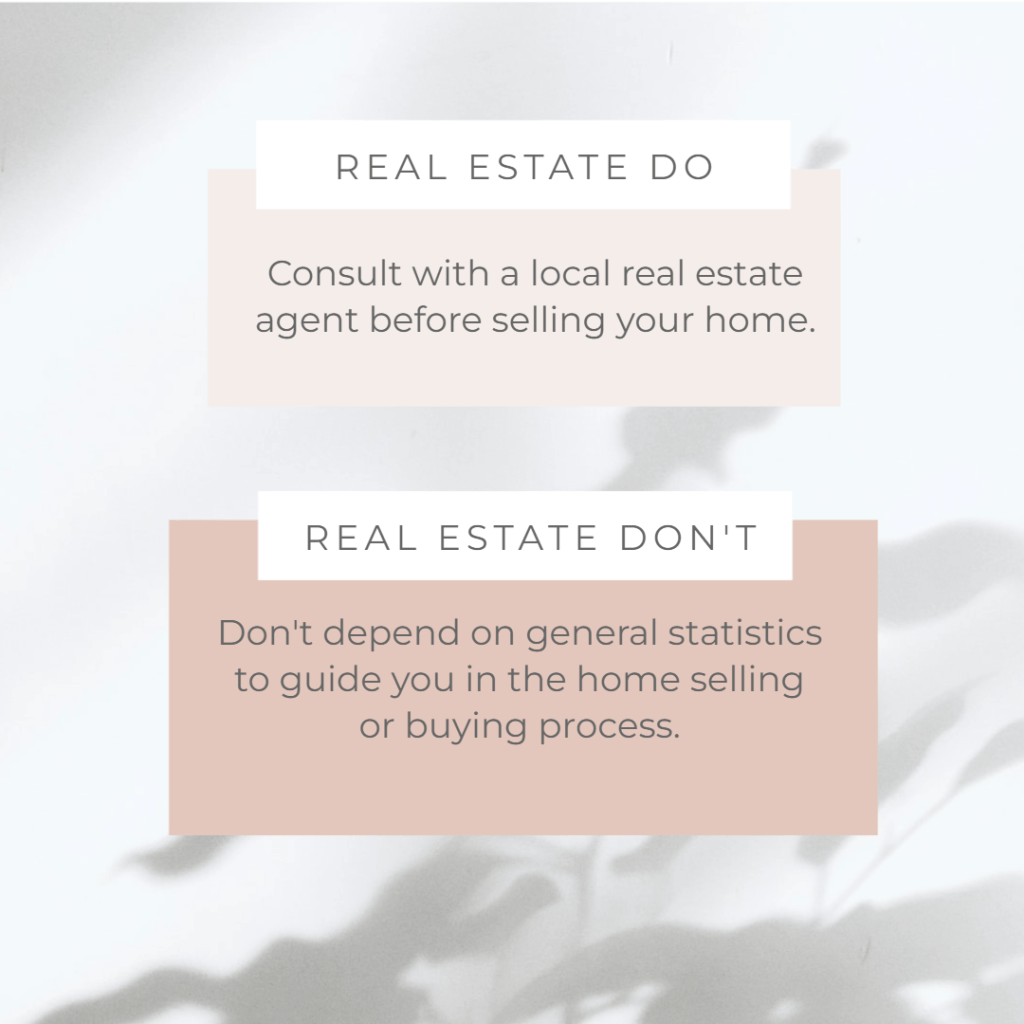
So, before you sell your home consult with a local real estate agent. Someone that knows your market and can offer you their knowledge and expertise about what will be the best marketing strategy for selling your home. Don’t rely on the news brief that you heard that said “Home are selling for 20% above asking price.” for setting your expectations.
Your home is likely your biggest asset and your sale should be handled with care.
The real estate market in the Willamette Valley is off to a very interesting start in 2022.
As expected, interest rates have started to bounce up. Not surprising to economists, lenders and real estate agents. We knew the record low interest rates of 2020-2021 would not stick around forever. What is crazy is the way consumers are responding. Buyers are in a panic. Because purchase prices are high, they think adding on increased interest rates will create a crash in the market. Not so.
There is a huge shortage of housing for all of the ready, willing and able buyers. “Who can afford these prices”, you ask. People who have large equity in their current home, that they can use to upsize or downsize. People who own their home outright and are moving to be closer to family. People who have good paying jobs that can work remotely from their dream home. First time home buyers that would rather build equity in their own home, then pay high rent to a landlord.
Another misconception is that we are going to see foreclosures flood the market. That is not likely in the Willamette Valley. A) Foreclosures were on hold during the pandemic. B) There are programs to help people stay in their home (unlike the 2008 era). C) Values are up. Most people can sell their home for more than they owe and pocket some money. The conditions just aren’t right for foreclosure, so don’t expect to see many in 2022.
Part of what is contributing to the buyer panic is that people are frustrated. They spent the last year throwing out offers and getting beat out time and time again. They just want to buy a home and they aren’t confident on how that can happen.
My advice to buyers: hang in there. It is a frustrating, tedious process, but it is doable. Know that the market is still very active and you are going to compete against other buyers. Stay in close communication with a trusted loan officer and listen to their guidance. Get yourself a good real estate agent and let them work for you. Listen to what they tell you about the loan eligibility of each home. Listen to their strategy for making offers. Don’t panic. Be patient. The right home will come together at the right time.
Welcome to my real estate blog! I am excited to share my love of the Willamette Valley, tips for buying and selling, home improvement ideas, history and so much more.
I have been a Realtor in Independence, Oregon since 2004. Monmouth/Independence is where I grew up, where all of my family lives and the community I love to call home. I am part of the second generation operating our family business. My parents, Carol & Donna Cable, bought our company in 1974. Today my brother Timm is our managing broker and my mother is still our bookkeeper. What a joy it is to work side by side with my family, serving the people in our community and helping make the American dream of home ownership a reality.
I have a large extended family. We love living close and sharing life together.
I love being active in my community and church, time with my family, sports, history and spending time in the beautiful Oregon outdoors.
Stay tuned for great information on all things real estate.





 Tanna Cable Real Estate Blog